
Google Ads vs SEO: Which Is Better for Your Business?
Should your business invest in Google Ads or search engine optimization (SEO)? Both strategies can help people discover your business online, but they work differently. Understand their costs, benefits and limitations to choose the right approach for your goals.
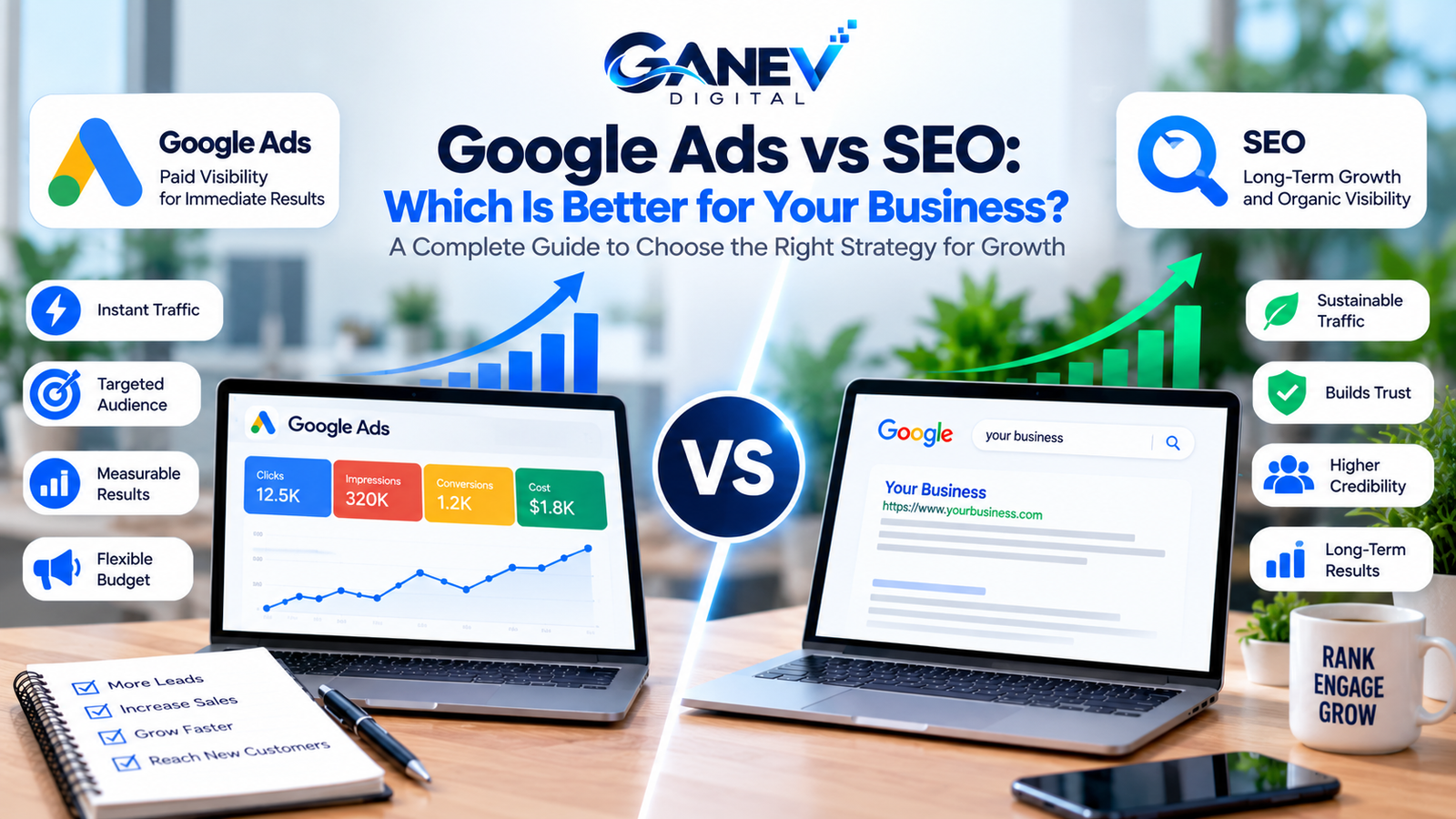
Introduction: Google Ads or SEO?
When customers search online for a product or service, your business needs a way to become visible. Two common methods are Google Ads and SEO.
Google Ads allows businesses to pay for advertising placements and reach relevant audiences through targeted campaigns. SEO focuses on improving website content, technical quality and relevance to help pages appear in organic search results.
Neither approach is automatically better for every business. Your choice depends on your budget, goals, competition, timeline and ability to maintain a long-term marketing strategy.
1. What Is Google Ads?
Google Ads is Google’s online advertising platform. Businesses can create campaigns to promote products and services to relevant audiences across supported Google advertising placements.
Search campaigns can display ads when people search for selected keywords. Depending on the campaign type, businesses may also advertise through other Google-supported placements.
How Google Ads Works
- Choose a campaign objective, such as leads or sales.
- Identify relevant keywords or audience signals for the campaign.
- Create advertisements and select a suitable landing page.
- Set a budget, bidding strategy and targeting options.
- Monitor results and improve the campaign based on performance.
When Can Google Ads Be Useful?
- When you need to test demand for a product or service.
- When you want to promote a time-sensitive offer.
- When you have a defined advertising budget and measurable goal.
- When you want to target specific search queries or locations.
Google Ads can begin generating traffic after a campaign is approved and starts serving. However, traffic, leads and sales are not guaranteed; results depend on targeting, competition, landing-page quality and the offer.
2. What Is SEO?
Search engine optimization is the process of improving your website so search engines can understand its content and users can discover relevant pages through organic search results.
Unlike paid search advertising, organic SEO listings are not purchased through a per-click ad budget. SEO still requires resources for research, content creation, technical improvements and ongoing maintenance.
Important Areas of SEO
- Keyword research: Understand what your audience searches for.
- On-page SEO: Improve page titles, headings, content and internal links.
- Technical SEO: Help search engines crawl and understand your website.
- Content quality: Publish useful, original information that meets search intent.
- User experience: Make your website accessible, mobile-friendly and easy to navigate.
- Measurement: Monitor performance with tools such as Google Search Console.
When Can SEO Be Useful?
- When you want to build long-term organic search visibility.
- When your audience regularly researches topics before purchasing.
- When you can consistently improve website pages and content.
- When you want to attract relevant visitors without paying for every organic click.
SEO generally takes time. Results vary depending on competition, website history, content quality, technical condition and the search queries you target.
3. Google Ads vs SEO: Key Differences
The main difference is how your website earns visibility. Google Ads uses paid campaigns, while SEO aims to improve organic search visibility.
| Factor | Google Ads | SEO |
|---|---|---|
| Visibility | Paid placements when campaigns serve. | Organic search listings earned through relevance and quality. |
| Timeframe | Can begin generating traffic soon after launch and approval. | Usually requires sustained work before meaningful results appear. |
| Traffic cost | Ad clicks or other campaign interactions can incur costs, depending on the campaign. | No per-click fee for organic listings, but optimization requires resources. |
| Budget control | Set campaign budgets and bidding limits. | Allocate resources to content, technical work and optimization. |
| Duration | Paid visibility depends on campaigns continuing to serve. | Well-performing pages may continue attracting traffic, but rankings can change. |
| Testing | Useful for testing ads, offers and landing pages. | Useful for learning from search queries and organic page performance over time. |
| Best fit | Time-sensitive campaigns and controlled paid acquisition. | Long-term visibility and answering relevant search queries. |
These differences are general guidelines, not guarantees. A carefully managed SEO strategy may perform well in some markets, while competitive paid campaigns may be expensive. Evaluate both against your specific business goals.
4. Google Ads vs SEO: Cost and Return on Investment
Cost is an important factor when choosing between Google Ads and SEO. However, comparing only advertising spend with the price of SEO work can be misleading because the strategies use different cost structures and timeframes.
Google Ads Costs
Google Ads budgets can include the money paid for advertising clicks or other campaign activity, along with optional management fees, creative work and landing-page development. Actual costs depend on the industry, competition, targeting and campaign setup.
Track conversions and the quality of enquiries, not just clicks. A campaign that generates inexpensive traffic may still be unprofitable if visitors do not become customers.
SEO Costs
SEO costs can include keyword research, content writing, technical improvements, website development and specialist support. The workload depends on the website’s current condition and the competition for relevant search queries.
Organic traffic does not have a direct cost per click, but SEO is not free. It requires time, expertise and ongoing work, and organic rankings cannot be guaranteed.
Useful Metrics to Track
- Cost per lead: How much you spend to generate a lead.
- Conversion rate: The percentage of visitors who complete a desired action.
- Customer acquisition cost: The cost of acquiring a new customer.
- Return on ad spend: Revenue attributed to ads divided by advertising spend.
- Organic search performance: Search clicks, impressions and relevant queries.
5. Advantages and Limitations
Advantages of Google Ads
- Can generate traffic soon after launch and approval.
- Offers control over campaign budgets and targeting settings.
- Allows businesses to test messaging and offers.
- Provides campaign reporting for evaluating performance.
- Can support product launches and time-sensitive promotions.
Limitations of Google Ads
- Competitive keywords can have high click costs.
- Traffic from paid placements depends on campaigns continuing to run.
- Poor targeting or landing pages can waste budget.
- Clicks do not guarantee qualified leads or sales.
Advantages of SEO
- Can build lasting organic search visibility.
- Helps potential customers discover useful information.
- Can attract visitors who are actively researching solutions.
- Supports content marketing and website credibility.
- Can complement other digital marketing channels.
Limitations of SEO
- Meaningful results may take months or longer.
- Rankings and traffic can fluctuate.
- Competitive search terms may require substantial effort.
- Content and technical improvements need regular review.
- Search visibility and ranking positions cannot be guaranteed.
6. Which Strategy Is Right for Your Business?
The best choice depends on your objectives, resources and how customers find your products or services.
Choose Google Ads When…
- You need to test demand or promote a new offer.
- You have a defined budget for paid customer acquisition.
- You need to reach people searching for a specific service.
- You have a relevant landing page and can track conversions.
- You can measure whether leads and sales justify the cost.
Prioritize SEO When…
- You want to improve long-term organic visibility.
- Your customers search online for information before purchasing.
- You can invest in useful content and website improvements.
- You want to build a library of relevant resources.
- You can be patient while your organic search performance develops.
7. Can You Use Google Ads and SEO Together?
Yes. Google Ads and SEO can complement each other because they serve different roles in your digital marketing strategy. You do not always need to choose only one.
A Practical Combined Strategy
- Build the foundation: Create useful service pages and make sure your website works well on mobile devices.
- Start SEO activities: Research relevant keywords, improve page content and publish articles that answer customer questions.
- Test paid campaigns: Use a controlled Google Ads budget to test relevant search terms and offers.
- Measure outcomes: Track enquiries, conversions, lead quality and costs.
- Improve your strategy: Use the insights to refine your landing pages, content and future campaigns.
Paid search data can provide useful observations about the search terms and offers that attract enquiries. SEO performance can help identify topics and pages worth improving. However, paid campaign results do not guarantee organic rankings.
Your Google Ads vs SEO Decision Checklist
Before investing in either strategy, review these questions and use the answers to guide your next step.
- Have you defined your main marketing goal?
- Do you know which audience and locations you want to reach?
- Is your website ready to convert visitors into enquiries or sales?
- Can you measure conversions and lead quality?
- Do you have a realistic budget for paid advertising or SEO work?
- Can you maintain a consistent content and optimization process?
- Will you review performance and adjust your strategy regularly?
If you need to validate demand quickly and have a measurable offer, consider testing Google Ads. If your priority is building organic visibility over time, focus on SEO. If resources allow, a coordinated strategy may be appropriate.
Frequently Asked Questions
1. Is Google Ads better than SEO?
Neither is universally better. Google Ads can help businesses reach audiences through paid placements, while SEO aims to build organic search visibility. The right choice depends on goals, budget, competition and timeframe.
2. Is SEO free?
Organic search listings do not require a per-click advertising payment, but SEO still requires time and resources for content, technical improvements, research and ongoing maintenance.
3. How quickly can Google Ads generate results?
A campaign may begin generating traffic soon after it is approved and starts serving. Leads and sales depend on targeting, competition, the offer, landing-page quality and conversion tracking.
4. How long does SEO take to work?
SEO timelines vary. Some improvements may be noticed sooner, while building meaningful visibility for competitive queries can take months or longer. Results depend on the website, content, competition and search intent.
5. Can a small business use both Google Ads and SEO?
Yes. A business can work on organic visibility while running controlled paid campaigns. The important thing is to set realistic budgets, track outcomes and ensure each activity supports a clear objective.
6. Which strategy is better for long-term growth?
SEO can support long-term organic visibility, while Google Ads can provide paid exposure when campaigns are running. Many businesses evaluate both based on profitability, customer acquisition and their growth goals.
Conclusion: Google Ads vs SEO
Google Ads and SEO are different approaches to online visibility. Google Ads can help businesses reach relevant audiences through paid campaigns, while SEO focuses on earning organic search visibility through relevant content and website improvements.
Choose Google Ads when a controlled paid campaign fits your immediate objectives. Prioritize SEO when you want to develop organic visibility over time. Consider using both when your budget, resources and business goals support a coordinated approach.
Most importantly, measure meaningful results such as qualified leads, customer acquisition costs and sales. Let your own data guide future investment rather than assuming one channel is always the best choice.
Need Help Choosing the Right Digital Marketing Strategy?
Ganev Digital can help your business explore SEO, paid advertising and other digital marketing solutions based on your goals.
Explore Our Services → Discuss Your Project →