
How to Build a Brand Identity for a Small Business
A strong brand identity helps customers recognize your business, understand what makes it different and remember it when they need your products or services. Learn how to define your brand, choose visual elements and create a consistent identity on a realistic small-business budget.
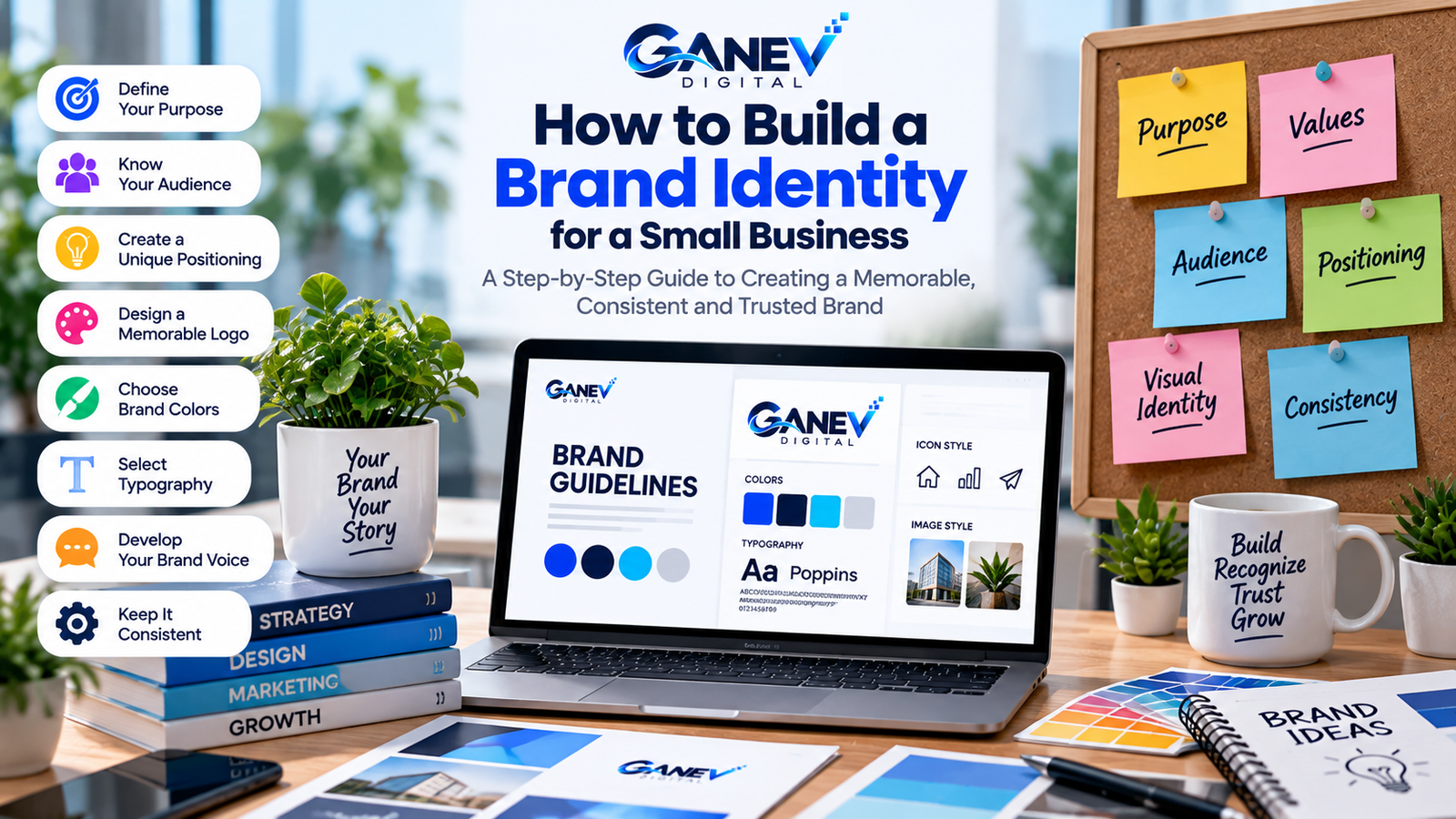
Introduction: What Is Brand Identity?
Brand identity is the collection of visual elements, messages and brand characteristics that represent your business. It includes your logo, colors, typography, tone of voice and the way your business communicates with customers.
For a small business, brand identity is not just about having an attractive logo. It is about creating a clear and consistent impression wherever customers discover or interact with your brand.
Whether you run a local shop, service business, online store or freelance business, a thoughtful brand identity can help communicate professionalism and make your business easier to recognize.
1. What Is a Brand Identity?
Brand identity is how a business presents itself to its audience. It combines visual design, communication and brand personality to create a recognizable experience.
Key Elements of Brand Identity
- Logo: A recognizable symbol or wordmark representing your business.
- Color palette: A selected group of colors used consistently across brand materials.
- Typography: Fonts and text styles used in your website, social media and marketing materials.
- Brand voice: The personality and tone used in written and spoken communication.
- Visual style: Photography, illustrations, layouts, icons and graphic elements.
- Brand values: The principles that guide your business decisions and customer experience.
Your brand identity should reflect the business you actually run and the experience customers can expect from you.
2. Define Your Brand Purpose and Values
Before choosing fonts or designing a logo, clarify why your business exists, what it offers and what makes it meaningful to your customers.
Answer These Four Questions
- What products or services does your business provide?
- What customer problem does your business solve?
- What makes your approach different from competitors?
- What three qualities should people associate with your brand?
Choose Your Brand Values
Brand values should guide how you communicate and serve customers. Select a few values that genuinely describe your business instead of choosing words simply because they sound impressive.
- Trust and transparency
- Creativity and originality
- Quality and reliability
- Simplicity and clarity
- Customer-focused service
- Innovation and growth
3. Understand Your Target Audience
Your brand should appeal to the people most likely to purchase your products or services. Understanding their needs helps you make more relevant design and communication decisions.
Research Your Ideal Customers
- Needs: What problem are they trying to solve?
- Preferences: What styles, messages and experiences appeal to them?
- Budget: What price range is realistic for them?
- Buying habits: Where do they research and purchase products or services?
- Concerns: What makes them hesitate before buying?
You can learn about your audience through customer conversations, reviews, feedback forms, social media comments and competitor research. Use actual observations rather than relying only on assumptions.
4. Identify Your Brand Positioning
Brand positioning describes how you want customers to perceive your business compared with alternatives. It helps you focus your message and explain why a customer might choose you.
Research Your Competitors
Review a few businesses serving a similar audience. Look at their websites, logos, service descriptions, social media content, customer reviews and pricing presentation.
- What competitors communicate clearly.
- Which customer needs appear underserved.
- What strengths your business can genuinely demonstrate.
- How your brand can be distinctive without confusing customers.
Write a Simple Positioning Statement
Avoid unsupported claims such as “the best in the market.” Specific, believable benefits are more useful for building trust.
5. Create a Memorable Logo
Your logo is an important visual identifier, but it should work as part of a wider identity system. A useful logo is recognizable, appropriate for your business and readable at different sizes.
Logo Design Best Practices
- Keep the design clear and easy to recognize.
- Choose a style that fits your business personality.
- Check that the name is readable at small sizes.
- Create versions suitable for light and dark backgrounds.
- Test how the logo looks on websites, social media and printed materials.
- Use high-quality, scalable formats where possible.
Common Logo Mistakes to Avoid
- Adding too many colors, effects or decorative elements.
- Using complex details that disappear at small sizes.
- Copying another business’s logo or visual identity.
- Relying on a logo to communicate every detail about the business.
Tools such as Canva can help you explore design directions. For a professional identity, consider whether the final artwork meets your business needs and is suitable for different uses.
6. Choose Your Brand Colors
Colors help create a consistent visual impression. Instead of using a different combination in every design, define a small palette and document the exact color values.
Build a Practical Color Palette
- Primary color: Your main recognizable brand color.
- Secondary color: A supporting color for variety and hierarchy.
- Accent color: A color used selectively to draw attention.
- Neutral colors: Colors such as white, gray or dark navy for backgrounds and text.
Consider your audience, industry, brand personality and the contexts in which your colors will appear. Check that text remains readable against its background, especially on mobile devices.
7. Select Your Brand Typography
Typography affects readability and the overall feel of your brand. A consistent font system also makes it easier to create websites, social posts, brochures and presentations.
Create a Simple Font System
- Heading font: A distinctive but readable typeface for titles and section headings.
- Body font: A highly readable typeface for paragraphs and longer content.
- Accent style: Optional bold or italic treatments used sparingly.
Two complementary font families are often sufficient. Use consistent font weights, sizes, line spacing and heading hierarchy instead of introducing new styles in every design.
Test Typography Across Devices
Preview your text on desktop and mobile screens. Make sure headings are clear, paragraphs are comfortable to read and buttons or labels do not become cramped.
8. Develop Your Brand Voice
Brand voice is the way your business communicates. It should reflect your personality while remaining appropriate for your audience and the situation.
Define Three Voice Characteristics
For example, a brand might choose to be professional, friendly and straightforward. Write a short description of what each characteristic means in practice.
- Professional: Provide accurate information and clear recommendations.
- Friendly: Use approachable language and acknowledge customer needs.
- Straightforward: Explain benefits clearly and avoid unnecessary jargon.
Apply Your Voice Consistently
Use the same basic communication principles in website copy, social media captions, email messages, proposals and customer support. Adapt the format to each platform without changing the fundamental personality of the brand.
9. Maintain Brand Consistency
A brand identity becomes more recognizable when customers see consistent visual elements and messaging across different touchpoints. Consistency does not mean every design must look identical; it means the designs should feel like they belong to the same business.
Where to Apply Your Brand Identity
- Website and landing pages
- Instagram, Facebook and LinkedIn profiles
- Social media posts, stories and video covers
- Business cards and printed materials
- Proposals, presentations and email signatures
- Packaging, signage or other customer-facing materials, where relevant
Create a Brand Guidelines Document
Store your logo files, color codes, font names, image style, tone-of-voice principles and examples in one accessible document. This makes future design work easier and helps others follow the same identity.
Your Small Business Brand Identity Checklist
Use this checklist to review your progress before applying your new identity across your business.
- Defined your business purpose and brand values.
- Identified your target audience and their needs.
- Reviewed competitors and clarified your positioning.
- Created a clear logo with suitable variations.
- Selected and documented your brand color palette.
- Established heading and body typography.
- Defined your brand voice and messaging principles.
- Applied the identity consistently to key customer touchpoints.
- Created a basic brand guidelines document.
- Reviewed readability and appearance on mobile devices.
You do not need to perfect every detail before getting started. Build a clear foundation, apply it consistently and refine the identity as you learn more about your customers.
Frequently Asked Questions
1. What is brand identity for a small business?
Brand identity is the combination of visual elements, messaging and brand characteristics that represent a business. It commonly includes a logo, colors, typography, visual style and tone of voice.
2. How do I create a brand identity from scratch?
Start by defining your purpose, values, audience and positioning. Then develop your logo, colors, typography and brand voice. Document the choices and apply them consistently across customer touchpoints.
3. Can I create a brand identity on a small budget?
Yes. Start with the essentials: a clear logo, a limited color palette, consistent typography and a simple set of brand guidelines. Free or affordable design tools can help you develop and test initial concepts.
4. How many colors should a brand use?
There is no fixed rule, but a small palette with primary, secondary, accent and neutral colors is often easier to manage consistently than a large collection of unrelated colors.
5. What is the difference between a logo and brand identity?
A logo is one visual element. Brand identity is the broader system that includes the logo, colors, typography, imagery, messaging and other elements that shape how the business presents itself.
6. How often should I update my brand identity?
Review your identity when your audience, services, positioning or business goals change significantly. Maintain recognizable elements where they continue to serve your business, and update elements that no longer fit.
Conclusion: Build a Brand Customers Can Recognize
Building a brand identity for a small business starts with understanding who you serve, what you stand for and how you want customers to perceive your business. Your logo, colors, typography and messaging should all support that direction.
Focus on clarity before complexity. A simple, consistent identity that reflects your actual business is more useful than a collection of attractive designs that communicate different messages.
Start with the essentials, document your choices and apply them across your website, social media and customer communications. As your business grows, review and refine your identity to keep it relevant to your audience.
Ready to Build a Stronger Brand?
Explore how Ganev Digital can help your business create a consistent online presence through branding, design and digital marketing solutions.
Explore Our Services → Discuss Your Project →