
How to Build a Strong Digital Presence for Your Business
Want more potential customers to discover your business online? Learn how to build a strong digital presence with a professional website, SEO, social media, useful content and consistent branding.
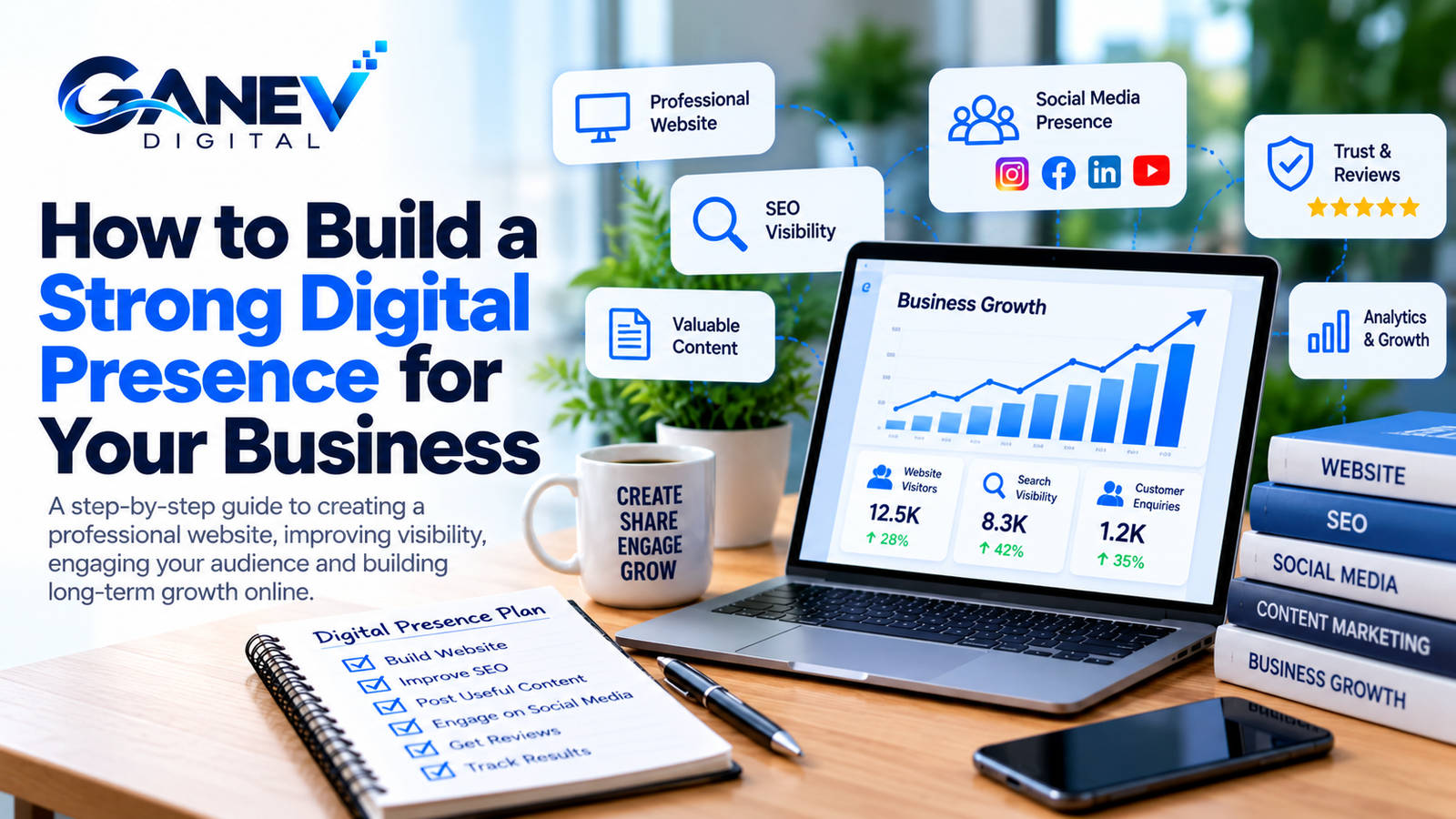
Introduction: Why Does Digital Presence Matter?
A digital presence is the way your business appears and interacts with people across the internet. It includes your website, search engine listings, social media profiles, online reviews and published content.
Customers often research businesses online before contacting them or making a purchase. If your business is difficult to find or its information is incomplete, potential customers may choose another provider.
Building a strong digital presence helps your business become more discoverable, communicate its value and establish trust over time. The key is to use the right channels consistently.
1. Build a Professional Website
Your website acts as a central destination for information about your business. It should explain who you are, what you offer, who you serve and how visitors can contact you.
A professional business website should include:
- Homepage: Explain your main value proposition clearly.
- About page: Introduce your business and expertise.
- Services page: Describe your solutions and benefits.
- Contact page: Make it easy to send an enquiry.
- Blog: Publish useful articles related to your industry.
- Mobile-friendly design: Ensure the website works across screen sizes.
A website should also load efficiently, use secure HTTPS connections and present information in a readable, organized format.
2. Improve Search Engine Visibility with SEO
Search engine optimization (SEO) helps search engines understand your website and helps people discover relevant pages through organic search results.
Start with these essential SEO activities:
- Research keywords that match your audience’s search intent.
- Write descriptive SEO titles and meta descriptions.
- Organize pages with clear H1, H2 and H3 headings.
- Publish useful, original content that answers customer questions.
- Add relevant internal links between blog articles and service pages.
- Optimize images with suitable dimensions and descriptive alt text.
- Use Google Search Console to monitor search performance.
Focus on providing relevant information rather than repeating keywords unnecessarily. SEO requires ongoing improvement, and results depend on factors such as competition, content quality and search intent.
4. Create Valuable Content
Content marketing helps your business answer customer questions, demonstrate knowledge and provide useful information before someone decides to purchase a product or service.
Useful content formats include:
- Blog articles that answer common customer questions.
- Short videos explaining problems and practical solutions.
- Carousels with actionable tips and step-by-step guides.
- Case studies describing genuine projects and outcomes.
- Frequently asked questions about your services.
- Behind-the-scenes content that explains your process.
Plan your topics using a content calendar. Decide what to publish, which audience it serves, which platform is suitable and what action readers should take next.
Prioritize accuracy, usefulness and originality. If you use AI writing tools, review the content before publishing to ensure that it is accurate, relevant and valuable to readers.
5. Build Trust and Consistent Branding
People want confidence that a business is reliable before sharing personal details or spending money. Clear business information, genuine reviews and consistent communication can help establish that confidence.
- Keep your business details accurate across online platforms.
- Use consistent colors, typography, imagery and brand messaging.
- Request honest reviews from genuine customers when appropriate.
- Respond to feedback and questions professionally.
- Show authentic project examples and testimonials with permission.
- Make your contact details and enquiry process easy to find.
Avoid fake testimonials, misleading claims or purchased reviews. A trustworthy digital presence should accurately represent your business and the experience customers can expect.
6. Measure Your Digital Performance
Measuring performance helps you understand which activities contribute to your business goals and which areas need improvement. Choose metrics that reflect meaningful outcomes, not just visibility.
Google Search Console
Google Search Console provides information about your website’s performance in Google Search. You can review search impressions, clicks, click-through rate, search queries and indexing issues.
Visit Google Search Console to learn about the tool and monitor your website once it is set up.
Google Analytics
Google Analytics can help you understand website traffic, engagement and selected conversion events when tracking is configured correctly.
- Website: Visitors, engagement and enquiries.
- SEO: Search impressions, clicks and relevant queries.
- Social media: Reach, saves, shares and interactions.
- Content: Readership and useful visitor actions.
- Paid advertising: Spend, cost per lead and conversions.
Review performance over meaningful periods, identify areas that need attention and use the findings to guide your next improvements.
7. Avoid Common Digital Marketing Mistakes
Digital activity is more effective when it follows a clear strategy. Avoid these common mistakes when building your online presence:
- Using an outdated website or incomplete business profiles.
- Publishing content without understanding your audience.
- Using inconsistent branding across platforms.
- Ignoring customer questions, messages and reviews.
- Choosing keywords without considering search intent.
- Running ads without a clear objective or conversion tracking.
- Expecting immediate results from long-term SEO activities.
- Failing to review performance and improve your strategy.
Start with the essentials, set realistic goals and improve your digital presence consistently instead of trying to do everything at once.
Your Digital Presence Checklist
Use this checklist to turn the ideas in this article into practical actions for your business.
- Build a professional, mobile-friendly website.
- Complete and update relevant business profiles.
- Research target keywords and optimize important pages.
- Plan a consistent social media content schedule.
- Publish useful blog articles and other content.
- Maintain consistent branding across channels.
- Encourage genuine customer feedback.
- Configure analytics and search performance tracking.
- Review results and refine your strategy regularly.
Frequently Asked Questions
What is the first step in building a digital presence?
Define your target audience, business goals and main value proposition. Then establish a professional website and complete the online profiles most relevant to your customers.
Is a website necessary for every business?
A website provides a central place to explain your services, share information and receive enquiries. The exact requirements depend on your business model and customer journey.
How long does it take to build a strong digital presence?
Initial setup can be completed relatively quickly, but building visibility, trust and consistent engagement takes ongoing effort. Results depend on your industry, competition, resources and strategy.
Should a small business focus on SEO or social media first?
The right starting point depends on how your customers discover and evaluate services. SEO supports organic search discovery, while social media can support brand discovery and engagement. Many businesses benefit from a coordinated approach.
How can I measure my digital presence?
Track relevant indicators such as search clicks, website enquiries, qualified leads, social engagement and conversions. Compare performance over time and use the results to guide improvements.
Conclusion: Build Your Online Presence Step by Step
Building a strong digital presence requires more than creating social media accounts or launching a website. It involves combining a professional website, useful content, search visibility, consistent branding, customer trust and measurable business goals.
Start with the channels that matter most to your audience. Improve your website, publish helpful content, communicate consistently and review your results regularly. Small, consistent improvements can build a stronger foundation for long-term online growth.
Ready to Strengthen Your Digital Presence?
Explore digital marketing solutions designed to help your business improve online visibility, connect with the right audience and build a stronger digital foundation.
Explore Our Services → Discuss Your Project →