
Why Content Marketing Matters for Growing Businesses
Growing a business takes more than promoting products or services. Customers want useful information, trustworthy brands and solutions to their problems. Content marketing helps businesses deliver that value while building relationships with potential customers.
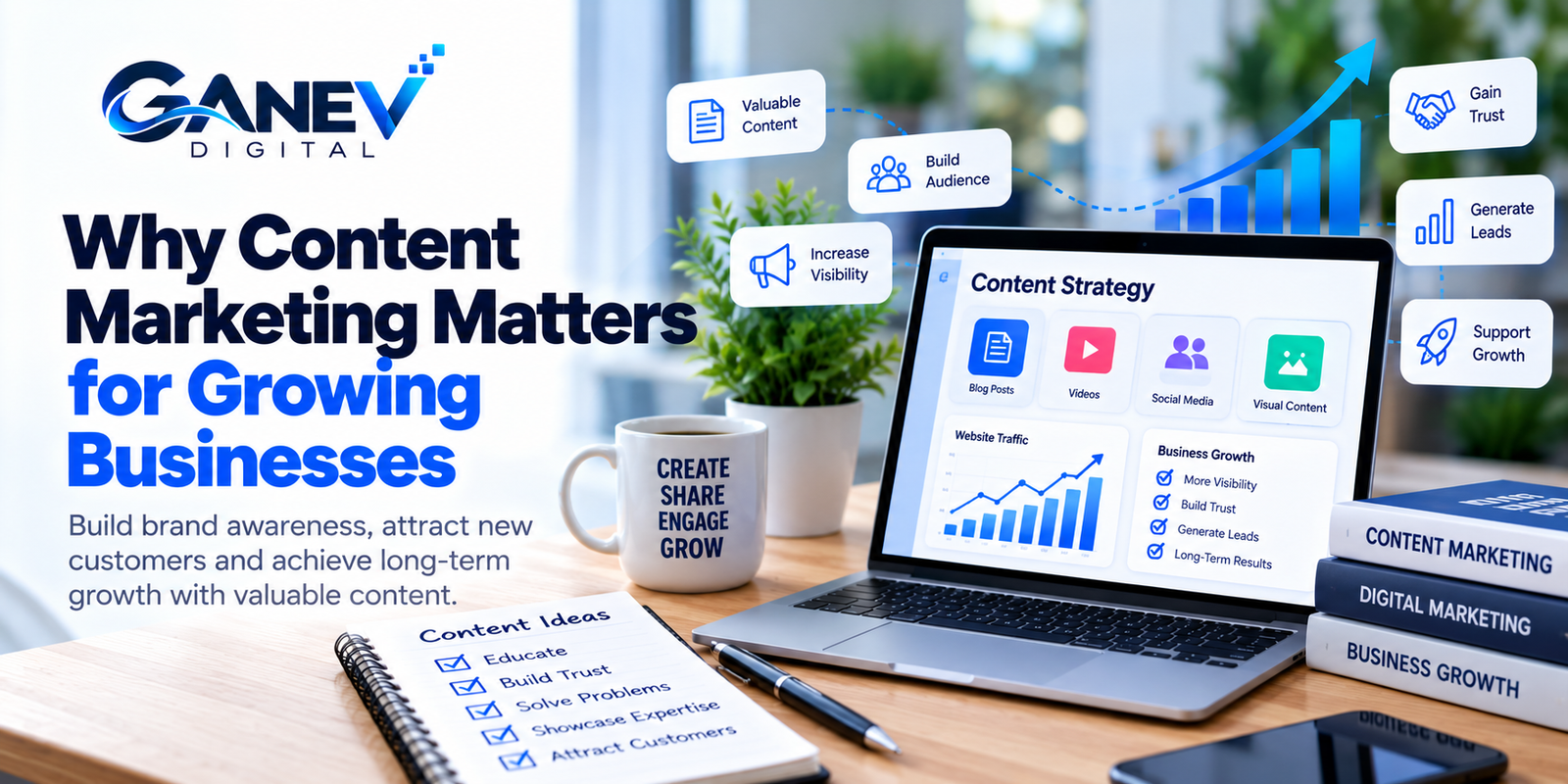
Whether you run a local shop, a startup, a service business or an online store, content can help you explain what you offer and why it matters. In this guide, we will explore the benefits of content marketing and how to begin with a practical strategy.
1. What Is Content Marketing?
Content marketing is the process of creating and sharing useful, relevant content to attract and engage a specific audience. Instead of focusing only on direct sales messages, it helps answer customer questions, explain solutions and demonstrate your business’s knowledge.
Content marketing can include:
- Educational blog articles and website guides
- Social media posts, carousels and short-form videos
- How-to videos, tutorials and demonstrations
- Email newsletters and helpful resources
- Case studies, project showcases and customer stories
- Infographics, checklists and downloadable guides
The goal is to give your audience something useful while helping people understand your brand, products or services.
2. Why Does Content Marketing Matter for Growing Businesses?
Customers often research a problem before choosing a business. They may search Google, watch a video, compare options or check social media profiles. Helpful content gives your business more opportunities to appear during this decision-making process.
Consistent, relevant content also gives potential customers a clearer picture of your expertise and the value you provide. Over time, this can support brand awareness, website discovery, customer relationships and enquiries.
Key idea: Content marketing is not simply about publishing more posts. It is about publishing useful content that serves your audience and supports a clear business objective.
3. Six Key Benefits of Content Marketing
A well-planned content strategy can support several areas of business growth. Results depend on content quality, audience needs, distribution, competition and consistency.
Build Brand Awareness
Useful articles, videos and social posts introduce your business to people who may not know about your brand. Sharing relevant information helps people understand what you do.
Support SEO and Discoverability
Helpful, search-focused articles can answer questions people enter into search engines. Organised content and relevant internal links also help visitors discover related pages on your website.
Build Trust and Credibility
Tutorials, clear explanations and practical advice show how your business approaches customer problems. Accurate, useful content can help people make informed decisions.
Attract Relevant Enquiries
Content that addresses a customer’s specific challenge can attract people who are already looking for a solution. Clear next steps make it easier for interested readers to contact your business.
Support Customer Education
Guides, FAQs and demonstrations explain your services, answer common questions and help customers understand their available options before making a decision.
Create Reusable Marketing Assets
A useful blog article can become a carousel, short video, email or checklist. Repurposing content helps you communicate one valuable idea across different channels.
4. Types of Content Growing Businesses Can Create
You do not need to use every content format. Start with the formats your audience prefers and the resources your business can manage consistently.
Blog Articles
Use blog posts to answer common questions, explain processes and share practical advice. For example, a digital marketing agency could publish an article about improving a small business’s online visibility.
Social Media Content
Create educational carousels, short videos, quick tips, behind-the-scenes updates and project examples. Keep each post focused on one useful idea.
Videos and Tutorials
Demonstrations can make complicated topics easier to understand. Show a process, explain a common mistake or answer a question customers frequently ask.
Case Studies and Project Showcases
Where you have permission and reliable evidence, explain the customer’s challenge, the work completed and the results achieved. Be transparent about what was measured and avoid unsupported performance claims.
Email Newsletters
Share new articles, useful resources, product updates and relevant business news with subscribers who have agreed to receive your communications.
5. How to Build a Simple Content Marketing Strategy
A basic plan helps you publish with purpose instead of choosing topics randomly. Follow these steps to create a manageable starting point.
- Define your objective. Decide whether you want to improve awareness, attract relevant website visitors, educate customers or generate enquiries.
- Understand your audience. Identify the people you want to reach, the questions they ask and the problems they need to solve.
- Research useful topics. Review customer questions, relevant search terms and conversations in your industry. Choose topics that match your expertise and audience needs.
- Select suitable content formats. Turn suitable topics into blog posts, social media carousels, videos, guides or emails.
- Create a realistic publishing calendar. Plan what you will publish and when. Choose a schedule your team can maintain without sacrificing quality.
- Include a relevant next step. Depending on the topic, invite readers to explore a related article, view a service page or contact your business.
- Measure and improve. Review relevant metrics and use the findings to improve future topics, formats and distribution.
Practical tip: Start with a small number of well-researched topics. It is more useful to publish relevant, accurate content consistently than to produce large volumes of content without a clear purpose.
6. Common Content Marketing Mistakes to Avoid
Even a regular publishing schedule can be ineffective if content does not serve a clear purpose. Watch out for these common mistakes:
- Publishing without a goal: Define what each piece of content should help achieve.
- Talking only about your business: Balance promotional messages with useful information that answers audience questions.
- Ignoring search intent: Make sure an article addresses what the reader actually wants to learn.
- Inconsistent publishing: Create a realistic schedule and plan topics in advance.
- Using unclear calls to action: Give interested readers a relevant next step.
- Not reviewing performance: Use data to identify what deserves improvement rather than relying only on assumptions.
- Expecting instant results: Content marketing often requires ongoing work and refinement. Avoid promising a particular outcome or timeline without evidence.
7. A Practical Example: Content Marketing for a Local Business
Imagine a local bakery that wants more people to discover its products. Instead of posting only product photographs, it could create a mix of useful and promotional content.
- Educational: Share tips for storing baked goods and keeping them fresh.
- Behind the scenes: Show how selected products are prepared.
- Community content: Introduce seasonal products or highlight local events.
- Customer questions: Explain available ordering options and collection details.
- Promotional: Share current products, offers and ordering instructions.
The bakery could then review profile visits, website clicks, customer enquiries and orders to understand which content supports its goals. These are possible measurement options, not guaranteed outcomes.
8. Frequently Asked Questions
What is the main purpose of content marketing?
Its main purpose is to attract and engage a defined audience by creating useful, relevant content. It can also support awareness, customer education, trust and business objectives.
Is content marketing suitable for small businesses?
Yes. Small businesses can start with manageable formats such as FAQs, short videos, helpful social posts and blog articles based on the questions their customers ask most often.
How often should a business publish content?
There is no single schedule that suits every business. Choose a frequency you can maintain while keeping content accurate, relevant and useful. Review performance and adjust as needed.
How can businesses measure content marketing performance?
Choose metrics based on your objective. These may include relevant website visits, search impressions, engagement, email sign-ups, qualified enquiries or conversions. Interpret metrics in context rather than relying on a single number.
Does content marketing replace paid advertising?
Not necessarily. Content marketing and paid advertising can serve different but complementary purposes. Content can provide ongoing educational value, while paid campaigns can help promote selected messages to targeted audiences.
Conclusion: Start Creating Content with Purpose
Content marketing gives growing businesses a practical way to share knowledge, answer customer questions and communicate their value. From blog articles and social posts to videos and email newsletters, the best starting point is content that genuinely helps your audience.
Define your goals, understand your customers, create a realistic plan and review the results. Over time, this approach can help your business build a stronger and more useful online presence.
Ready to Build Your Content Strategy?
Ganev Digital helps businesses strengthen their online presence with content, digital marketing and website solutions tailored to their goals.